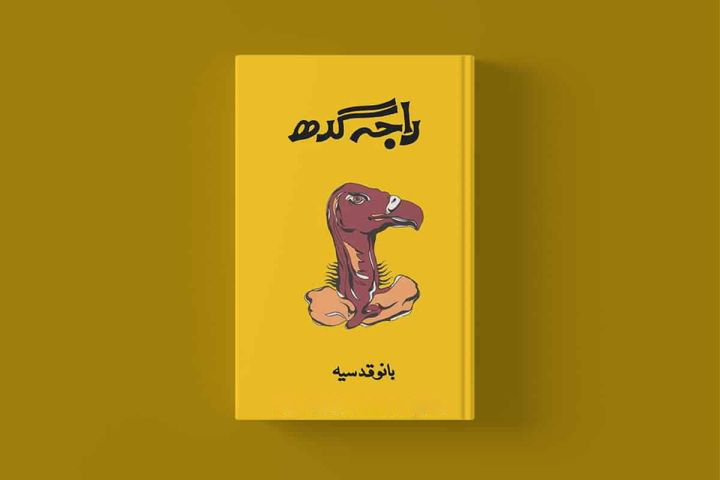
“Raja Gidh is perhaps the most powerful instrument to emotionally influence or even seduce the psyche of a reader.”
These striking words were once shared with me by one of my very close and perceptive friends, Anmol. She further reflected:
“This book is like a matchbox in the hands of children; those who are unaware of its true essence. In such innocence or ignorance, it does not illuminate; rather, it can set fire to delicate emotions and quietly burn the architecture of dreams.”
In hindsight, I must admit, she was absolutely right.
Back in 1993, when I was reading “Raja Gidh” for perhaps the fifth time, I was fortunate to have access to the literary and spiritual environment of Dastan Siraae; the residence of Aapa Bano Qudsia and the revered Ashfaq Ahmed (often affectionately called Ashfaq Baba). Over time, I had developed a certain closeness with them, enough to dare asking a question that had long unsettled me.
I asked Aapa Bano:
“Why did you write this novel?”
She looked at me, almost surprised, and replied calmly:
“Why? What is wrong in it? Is it not all present in the Qur’an?”
Before I could gather my thoughts or respond further, Ashfaq Baba gently intervened, almost with a hiss of caution:
“Baba Fayaz… do not go deeper into this.”
At that moment, I felt completely silenced; almost frozen in reverence, confusion, and perhaps a subtle fear of the depth I was approaching.
And yet, the questions remained.
“Who truly was Qayoom?”
“What did Seemi represent? Or Aftab, Sohail, Amtul?”
And; “What are we to make of that child; Aftab’s child, murmuring a language reminiscent of saints, almost echoing the tone of Jesus?”
The novel unfolds like a layered enigma:
A Conference of Birds-like allegory of human existence
The unsettling intersection of desire, morality, and madness! The paradox of Seemi; engaged in a morally complex relationship, yet speaking with the spiritual resonance of Rabia al-Basri!
Then comes the philosophy of “Ishq-e-La-Hasil”; the unattainable love, intertwined with the symbolism of the forbidden tree, sin, and virtue. One of the most provocative reflections appears in Qayoom’s thought:
“What difference is there between touching Seemi’s shoulders… and reverently kissing the Hajr-e-Aswad?”
This is where Raja Gidh transcends conventional storytelling; it ventures into metaphysical provocation, challenging the reader’s moral and spiritual frameworks.
It is often acknowledged that both Bano Qudsia and Ashfaq Ahmed were influenced by Qudratullah Shahab (famed for Shahab Nama). However, when one studies Shahab Sahib’s works closely, one does not always encounter the same delicate psychological layering or symbolic boldness that defines Bano Qudsia’s narratives.
In contrast, her writings; especially Raja Gidh, carry strong echoes of Greek mythology and psychological constructs:
“Oedipus complex”, “Electra complex”….
The eternal struggle between instinct and intellect!
She presents metaphysical dilemmas with remarkable boldness, often blurring the lines between the sacred and the profane.
And perhaps this is why Raja Gidh became nothing less than a literary explosion among the youth; a “Big Bang” of thought, emotion, and controversy.
When she once told me that the essence of this novel could be traced within the Qur’an itself, it sent a shiver through me. It suggested that these characters; Seemi, Qayoom, Aftab, were not merely fictional constructs.
They are reflections… perhaps fragments… of ourselves.
And at that realization; my mind felt as if it had exploded.
Raja Gidh remains an enduring enigma. A novel that does not merely tell a story, but interrogates the soul.
Who truly understands it?
Perhaps the question is not whether we understand Raja Gidh… but whether we are ready to understand ourselves.